
The Future of Patrol
Electric Vehicle Integration with the Canandaigua
Police Department

The Call to Charge
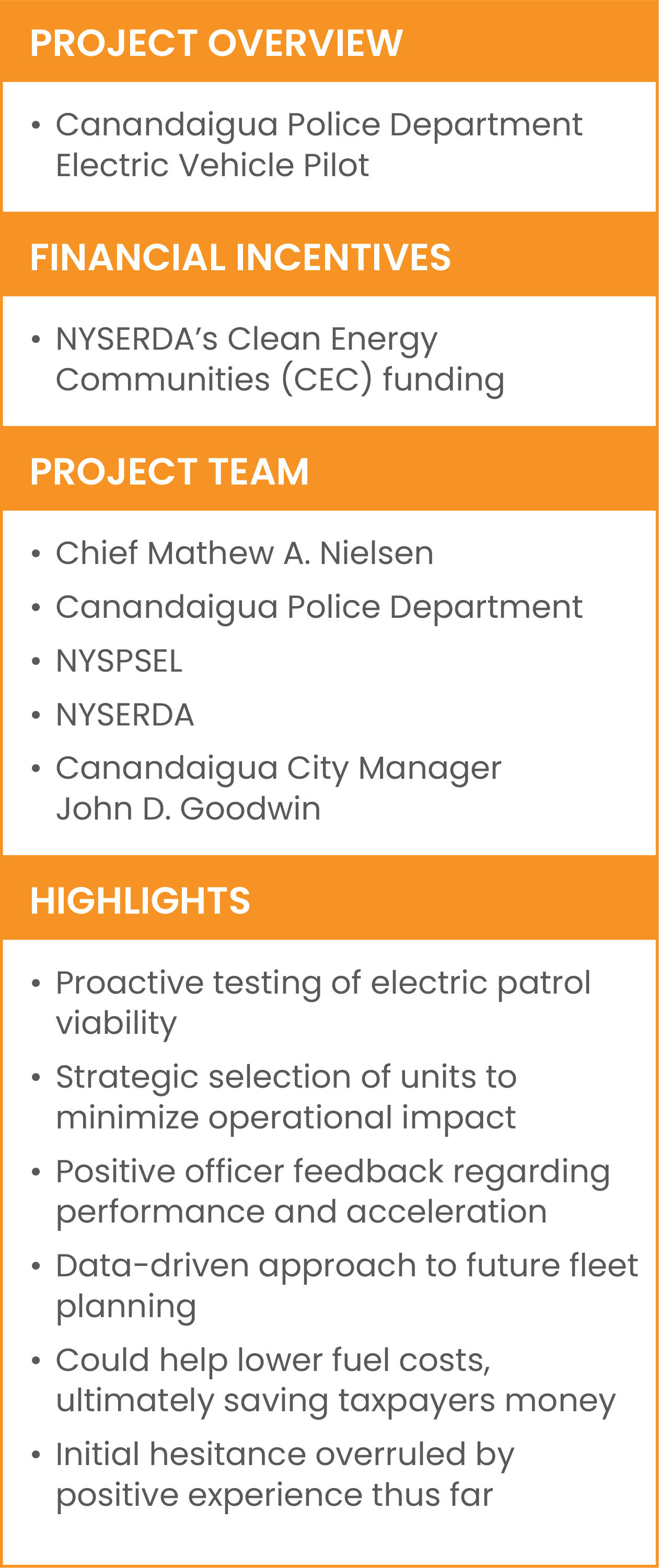
The transition to electric vehicles in law enforcement can be met with skepticism, but for the Canandaigua Police Department the path forward began with a simple invitation. The City Manager, having already seen success with EVs in the Code Enforcement and Public Works departments, approached Chief Mathew Nielsen with an opportunity: test the feasibility of electric police vehicles.
The City had already integrated seven electric Ford F150s into other departments, providing a solid foundation of local success stories. Chief Nielsen agreed to the pilot program with one critical condition: these electric units would be additions to the existing fleet, not replacements. This allowed the department to gather authentic, comparative data without compromising day-to-day operations.
Strategizing the Rollout
The department didn’t just buy cars; they assigned them to roles where they could thrive. Chief Nielsen placed the new electric units into assignments that allowed for some downtime, ensuring that if a vehicle needed to be out of service for charging or testing, it wouldn’t hinder emergency response operations.
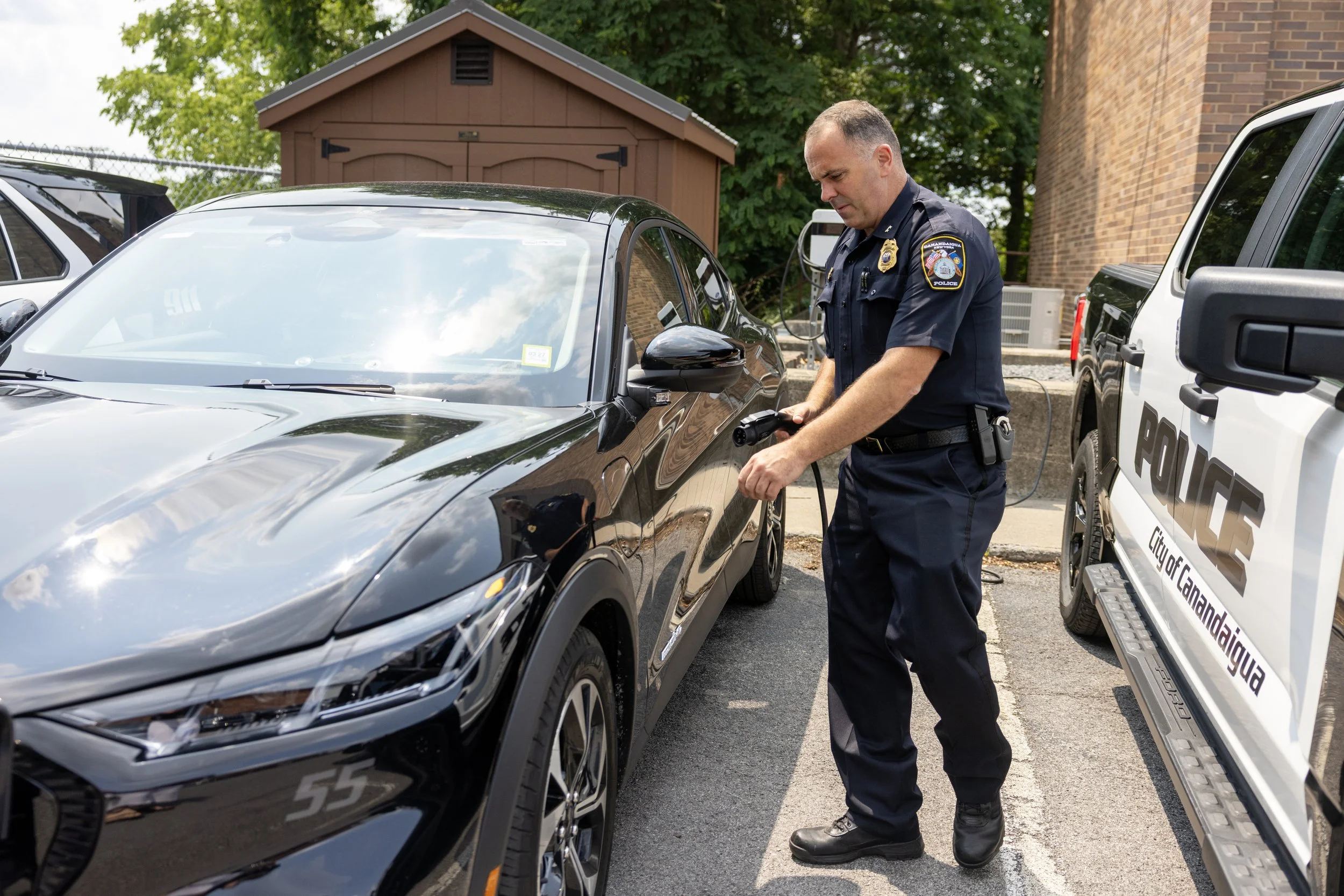
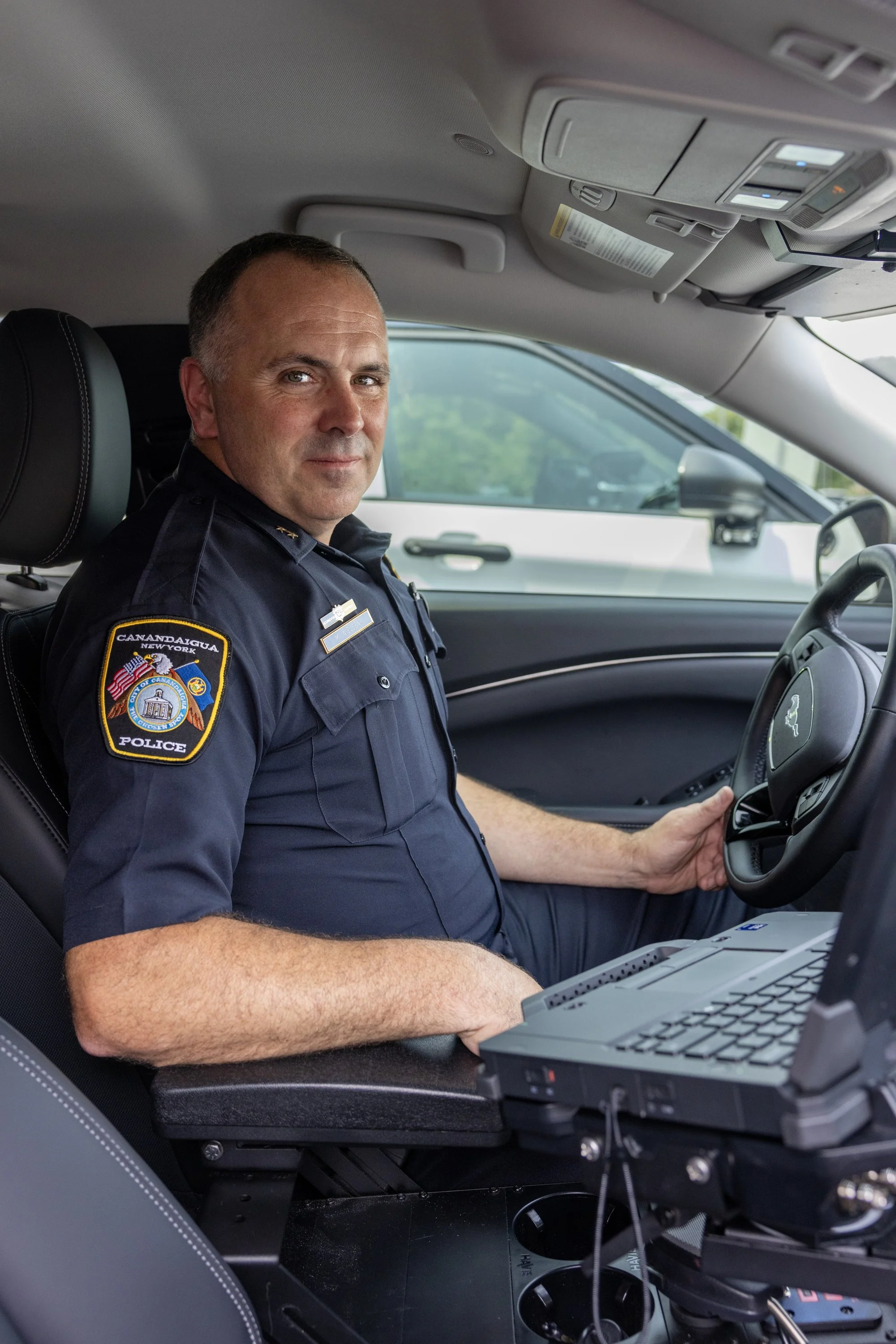
The Ford Mustang Mach-E: Assigned to the Traffic Enforcement Unit. Its compact, nimble frame makes it ideal for maneuvering through congested traffic, and because these officers carry less heavy gear, the vehicle’s size is a better fit for this particular assignment.
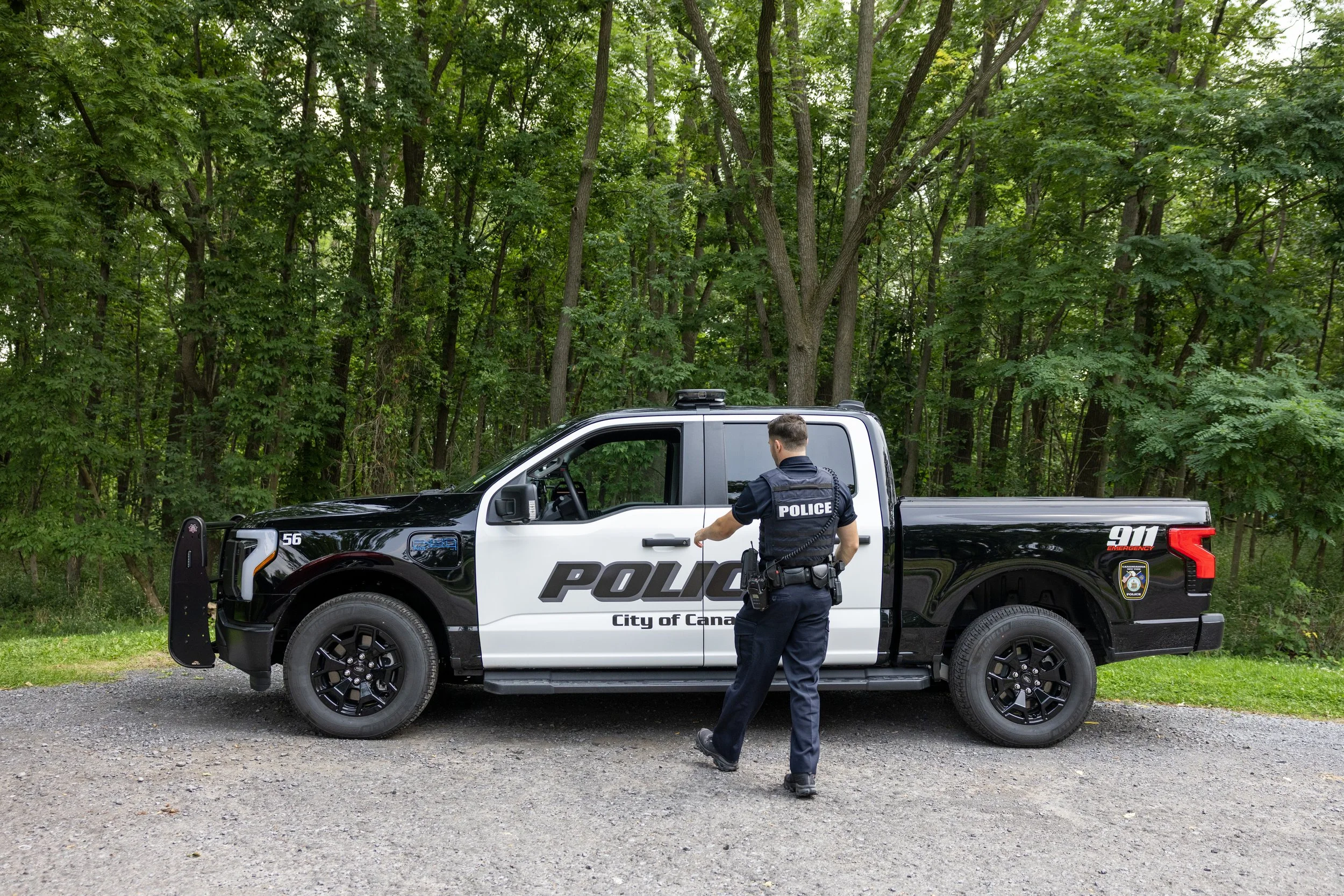
The Ford F150 Lightning: Assigned to the Evidence and Crime Scene Technicians. This powerhouse provides the space needed for specialized collection tools and can even power equipment on-site, eliminating the need for noisy, polluting portable generators.
The procurement process mirrored standard vehicle acquisitions, but the real engineering challenge lay in the upfitting. With the help of NYSPSEL in Newark, NY, the department researched and manufactured custom lighting and gear-mounting solutions to ensure the unique electric platforms were ready for duty.
From Skepticism to Speed
Initial officer reception was mixed. Some were hesitant, perhaps even cynical, about the shift away from traditional gas vehicles. However, that perception shifted rapidly during test drives. Officers found that the electric units—boasting superior acceleration —outperformed their gas-powered Ford Explorers and fit equipment just as well.
While some officers noted that the F150 felt large and the Mach-E felt compact, the driving experience itself turned critics into converts. The Chief notes that the political “noise” surrounding EVs makes it difficult to have an honest conversation, but the data is telling a different story. Many officers found they liked them much better than they expected to initially, according to the Chief.
The Bottom Line
While the program is still in its early stages, the preliminary results are encouraging.
Fuel Savings: The department has already saved roughly 800 gallons of fuel since March 2026, translating to about $2,700 in savings.
Maintenance: Beyond minor repairs (such as a suspected damaged door), the electric fleet has required zero maintenance costs to date.
Performance: The F150 runs through three full shifts before needing a charge, the Traffic Enforcement designated Mach-E runs about 2 shifts before needing a charge, and the Chief’s Mach-E used for administrative and traffic enforcement purposes typically only requires charging once a week. The range for both electric models are also comparable to their gas counterparts, with the Mach-E getting around 275 miles per charge and the F150 Lightning getting 300+ miles per charge.
The shift toward sustainable energy extends beyond automobiles. The department has just added an E-bike to their patrol assignments within the downtown district and local parks. Furthermore, a new electric golf cart is now utilized for trail and waterfront monitoring; Chief Nielsen highlights this addition as an engaging tool for community outreach, serving as a unique bridge for officers to connect with local youth and distribute stickers during their rounds.
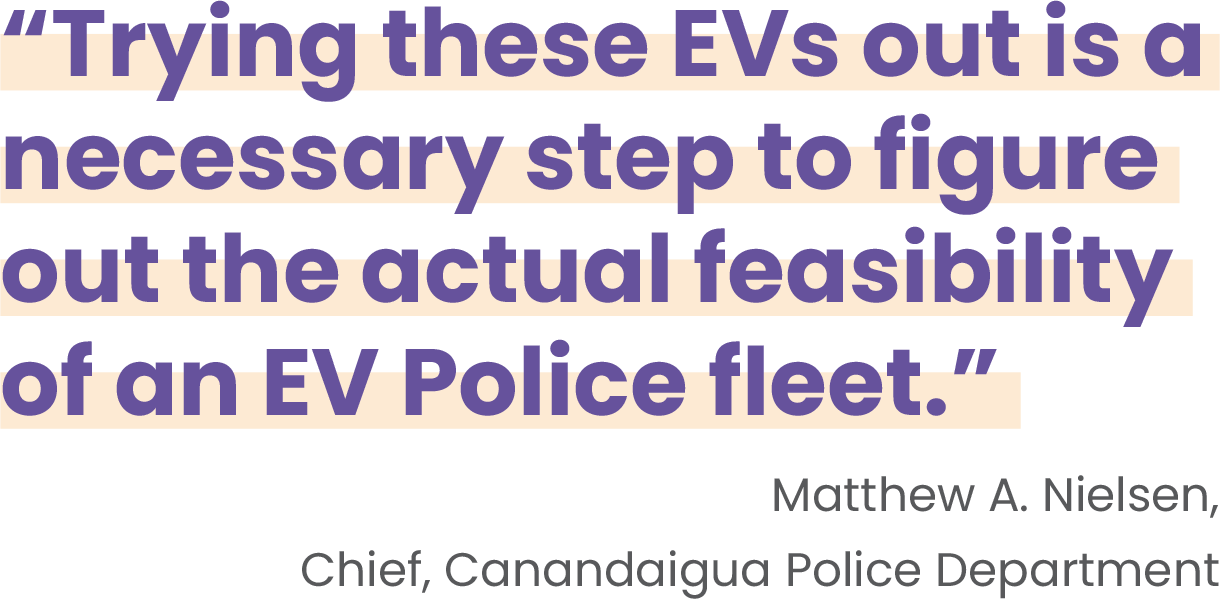
For Chief Nielsen, the goal isn’t necessarily a fully electric fleet overnight. Instead, it is about identifying the right tools for the right jobs. By prioritizing specialized assignments for EV adoption, the Canandaigua Police Department is proving that when it comes to the future of law enforcement, it pays to lead with data rather than assumptions.
Photos by Lauren Petracca